
There is something inviting about a room lined with books. The shelves tell a story of their own: favourite novels, well-thumbed reference books, collections built over years and titles still waiting to be opened.
A home library can take many forms, from a dedicated room to a run of bespoke bookcases in a sitting room or study. Wherever it sits, thoughtful design can bring together practical storage, comfortable surroundings and cabinetry that feels at home in the building.
Here are some of the things to consider when planning your own.
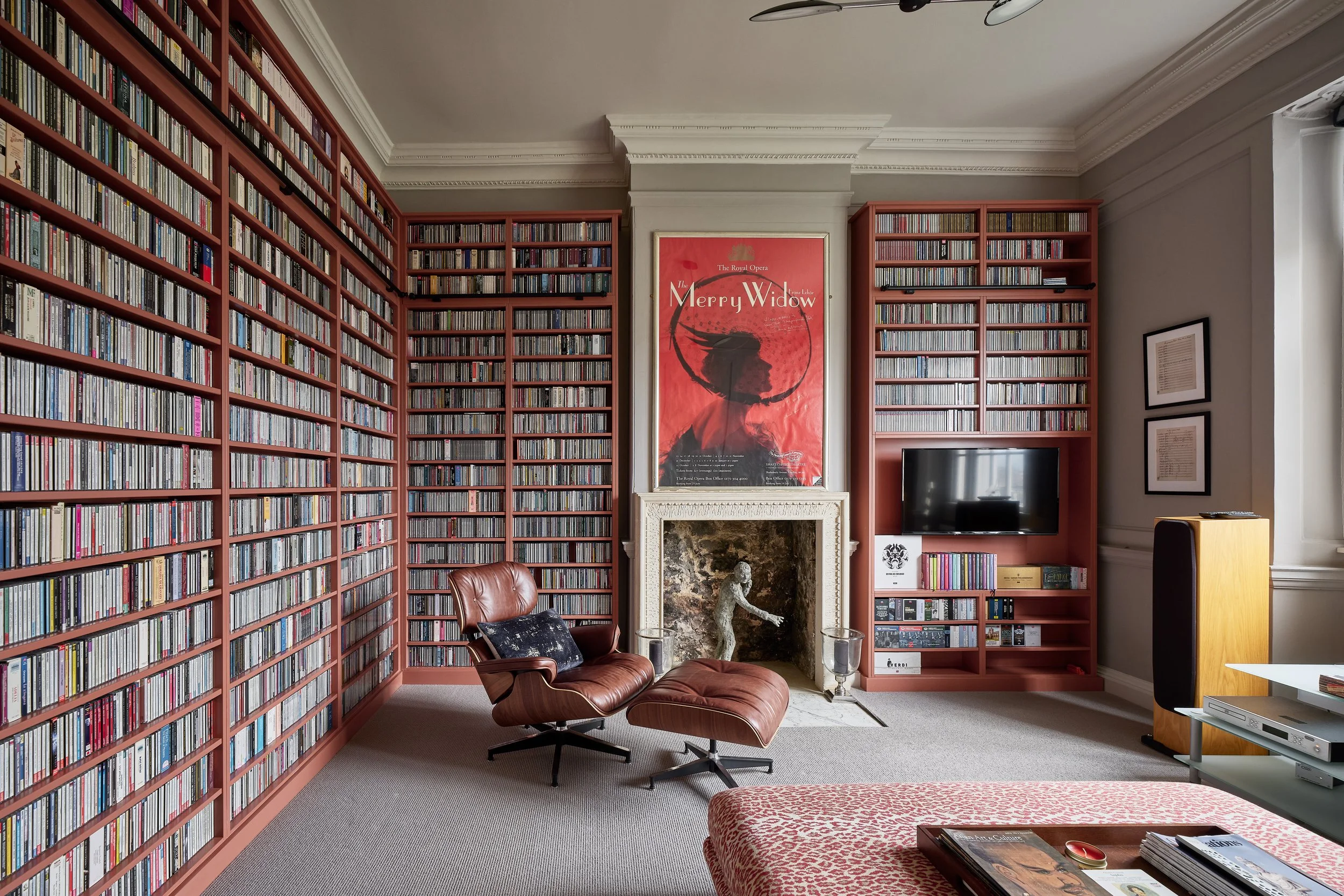
Bespoke shelving for a CD collection at a Georgian Townhouse in Bath
Begin with your books
Before thinking about finishes or shelf layouts, look at what the cabinetry will hold.
Paperbacks, large hardbacks and art books each need different amounts of space. A collection of mostly novels might suit relatively shallow shelving, while oversized volumes will need greater depth and more generous spacing.
Your library might also house CDs, vinyl records and a music system. Each brings its own requirements: LPs need space to stand upright, CDs can suit smaller compartments, and audio equipment may need ventilation, cable access and nearby sockets. If you plan to include a turntable, allow a comfortable surface for using it and enough clearance to open its lid.
Think about how you organise and enjoy your collection, too. Do you prefer neat rows, groups arranged by subject or artist, or a mixture of books, records and objects? These habits can help shape the design.
Leave room for the collection to grow. Shelves filled to capacity from the outset offer little flexibility, while some spare space allows new books, albums and other pieces to find their place over time.
Find the right space
A separate room offers the opportunity to create a dedicated retreat, but a home library need not occupy an entire room.
Alcoves beside a fireplace, a study wall or a generous landing can all provide space for bookcases. Shelving around a doorway can make use of an overlooked area and create a connection between adjoining rooms.
Consider how you will use the space beyond storing books. A comfortable chair, somewhere to set down a cup and good reading light can turn a stretch of shelving into a place you spend time.
Think about the position of the books in relation to direct sunlight, radiators and any areas prone to damp when choosing their location.
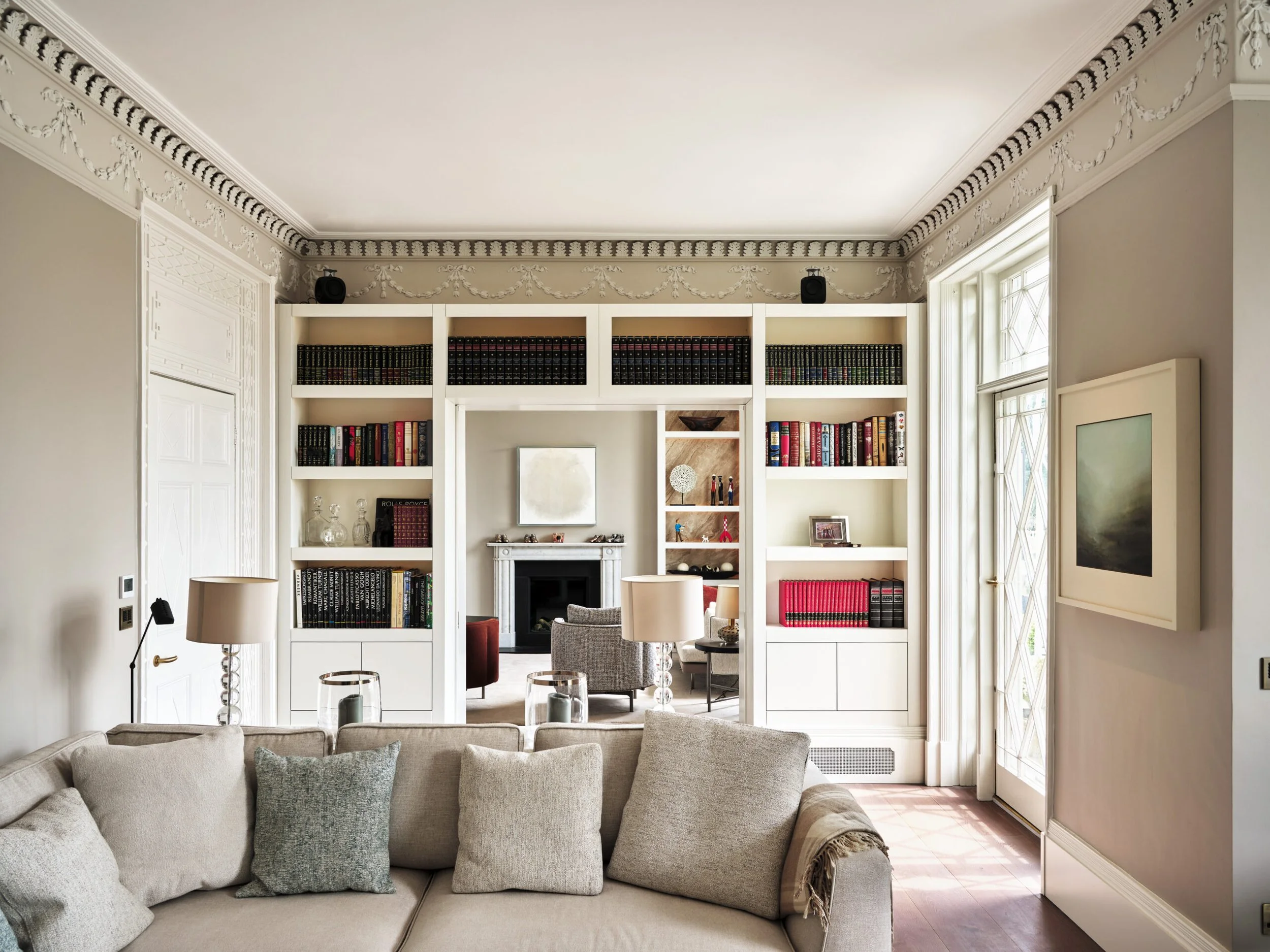
An ‘up and over’ bookcase at a Georgian Villa
Work with the proportions of the room
The most successful fitted bookcases feel considered as part of the room as a whole.
Their height, width and divisions should respond to the surrounding architecture, including windows, doors, fireplaces and existing mouldings. In a period property, the relationship with skirting boards and cornices can be particularly important.
Full-height cabinetry can make generous use of the available space, while lower bookcases leave room for artwork above. A long wall might benefit from several distinct bays, giving the shelving a rhythm and avoiding an uninterrupted expanse.
Bespoke design also allows awkward corners, uneven walls and variations in ceiling height to be addressed as part of the composition.
Consider the shelves themselves
Books place considerable weight on shelving. Shelf lengths, materials and support should therefore be considered together, with the construction suited to what each shelf will carry.
Adjustable shelves offer flexibility for changing collections and books of different sizes. Fixed shelves can establish a consistent layout and form part of the structure. A combination may suit the design best.
Shelf depth deserves equal attention. Too little limits what you can store; more than you need can make smaller books difficult to see and reach.
Discussing these details early helps ensure the finished bookcases work as well in daily use as they do visually.
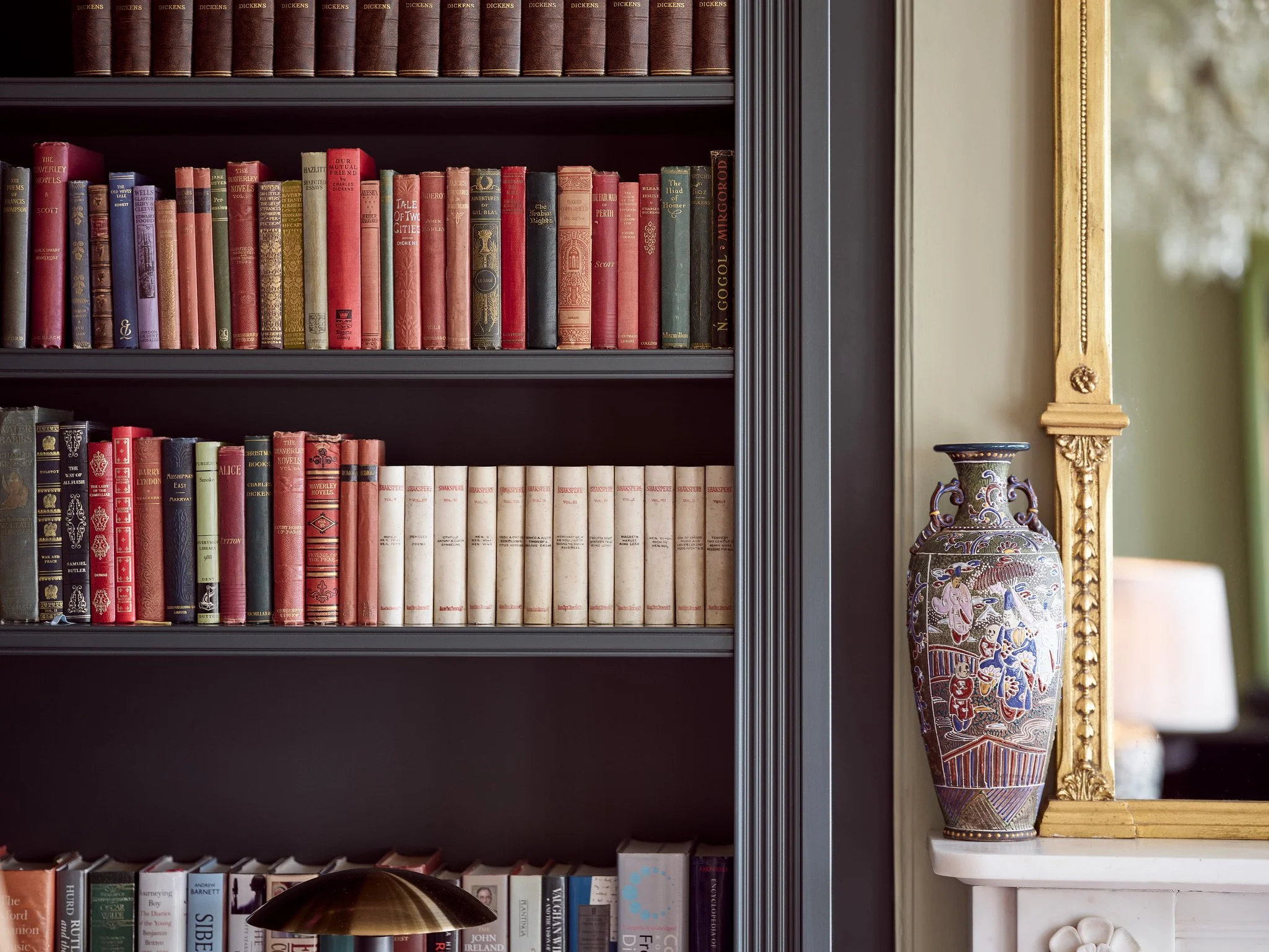
Close up of refined bookshelves at a Georgian Townhouse
Balance books with closed storage
Cupboards beneath or alongside open shelves can make a library useful for much more than books.
They provide space for paperwork, games, cables and other everyday items, particularly where the room also serves as a home office or sitting room. Keeping these behind doors allows the open shelving to remain focused on the collection.
The balance will depend on the room and your needs. A library devoted to books may call for mostly open shelving, while a family living space might benefit from a more generous proportion of closed storage.
Our bespoke cupboards and fitted cabinetry can bring these different storage needs together within one considered design.

Custom shelving and cabinetry at a Grade II listed country house
Choose materials and lighting together
Materials and finishes have a strong influence on the atmosphere of a library.
Painted bookcases can sit quietly within the room or introduce a deeper colour around the collection. Natural timber brings warmth and grain, with the choice of species and finish shaping the overall character.
Consider finishes alongside the flooring, upholstery and other joinery in the room. Books themselves contribute plenty of colour and texture, so it is useful to imagine the shelving filled when making decisions.
Lighting should be planned early, especially if it will be integrated into the cabinetry. Shelf lighting can illuminate the collection, while a reading lamp provides focused light beside a chair. Allowing for wiring and sockets at the design stage helps keep the finished arrangement tidy.
Make it comfortable to use
Finally, think through the everyday details.
Can you reach the shelves you use most often? Is there enough room to open cupboard doors comfortably? Will a desk or armchair interrupt access? If the bookcases extend to the ceiling, how will you safely reach the upper shelves?
A library should accommodate the way you live, whether that means quiet reading, working from home or sharing the room with family. These practical considerations help create a space that remains a pleasure to use as the collection grows.

A custom library ladder
A library for your home
Designing a home library brings together the collection, the room and the people who use it. From a pair of alcove bookcases to a complete library, bespoke cabinetry offers the opportunity to consider each of these in detail.
At Bath Bespoke, we design, make and install fitted furniture for homes of different styles and periods, working with private clients, architects and interior designers.
If you are planning a home library or bespoke bookcases, get in touch to discuss your ideas.
